


Long hours at a desk can leave the shoulders feeling heavy, the neck stiff, and the upper back quietly braced. You might notice yourself leaning toward your screen, lifting your shoulders while you type, or holding your breath as you focus. These habits can add to muscle tension over time, especially when the body stays in one position for long stretches.
Small changes can help. A more comfortable workstation, gentle movement breaks, and simple relaxation techniques for stress can support everyday comfort. And when tension keeps returning, massage may offer another way to encourage relief and relaxation.
Why desk work can feel tense
The body is built to move and change position. When you sit still for extended periods, your neck and shoulder muscles may work continuously to support your head and arms. Reaching for a mouse, looking down at a laptop, or holding a phone between your ear and shoulder can add unnecessary effort.
There isn’t one perfect posture you need to maintain all day. Instead, aim for a comfortable setup and vary your position regularly. For practical workstation guidance, see Mayo Clinic’s office ergonomics guide and the Occupational Safety and Health Administration’s computer workstation resources.
Make a few simple workstation adjustments
A desk setup that supports your body can help reduce the urge to hunch, reach, or shrug. Try these gentle adjustments:
Place your screen directly in front of you, roughly an arm’s length away, with the top of the screen at or just below eye level.
Keep your keyboard and mouse close enough that you can use them without reaching forward.
Let your shoulders rest naturally, with your elbows near your sides and your forearms supported when possible.
Sit with your back supported and your feet resting on the floor or a footrest.
If you use a laptop for long periods, consider a separate keyboard and mouse so the screen can sit higher.
Use a headset or speakerphone instead of cradling a phone between your head and shoulder.
These are starting points, not rules to force your body into. Adjust for your comfort, and change positions throughout the day.
Try a brief desk-side reset
A short movement break can be a welcome pause for both your muscles and your attention. Set a reminder if you tend to lose track of time, or use a natural transition between tasks as a cue to move.
Move slowly, keep your breathing comfortable, and stay within an easy range. You should feel gentle movement, not pain or strain.
Drop and release your shoulders. Slowly lift your shoulders toward your ears, then let them settle down. Repeat a few times without forcing the movement.
Roll your shoulders. Make small, smooth circles backward, then forward, keeping your jaw and hands relaxed.
Glide your head back. Sit comfortably and gently draw your head back, as if making a small double chin. Keep your eyes level and avoid tipping your head up or down.
Turn your head gently. Look a little to one side, return to center, then repeat on the other side. Keep your shoulders relaxed.
Take a breathing pause. Let your hands rest, unclench your jaw, and breathe normally for a few moments as you allow your shoulders to soften.
For more workplace stretching suggestions, see the Canadian Centre for Occupational Health and Safety’s workstation stretching guide. Stop if movement brings on pain, dizziness, numbness, tingling, weakness, or symptoms spreading into an arm. If discomfort is persistent or worsening, consult a qualified healthcare professional.
Relaxation techniques for stress and shoulder tension
Stress can show up physically as a tight jaw, raised shoulders, or shallow breathing. A brief reset may help you notice and release some of that bracing. Try pausing between tasks, setting both feet comfortably, and slowly exhaling as you let your shoulders drop. You might also look away from the screen, stand, or take a short walk.
These small practices are not a substitute for care when symptoms need medical attention. They can, however, help you build more moments of ease into a demanding workday. The aim is not to hold perfect posture, but to make room for regular movement and a calmer nervous system.
When desk tension calls for more support
If shoulder or upper-back tension continues despite making changes, you may want to explore additional support. Therapeutic massage benefits can include relaxation and a focused opportunity to address areas of muscle tension, with the approach shaped around your comfort and needs. Massage is not a diagnosis or a replacement for medical care, but it can be part of a broader self-care routine.
At Mountain Valley Massage in Hamilton, Montana, each session begins with a one-on-one consultation. Pressure, focus areas, and session length are discussed with you, so your care can be tailored to your goals.
Swedish Massage
Best suited for: General relaxation, easing everyday muscle tension, and unwinding after a demanding workweek.
What to expect: Long, gliding strokes and gentle kneading in a comfortable, private setting, with pressure adjusted through your consultation.

Deep tissue massage
Best suited for: People seeking more focused attention for areas of persistent or deeper-feeling tension.
What to expect: Slow, deliberate work with pressure adapted to your comfort. You can share feedback during the session, and your therapist can adjust as needed.
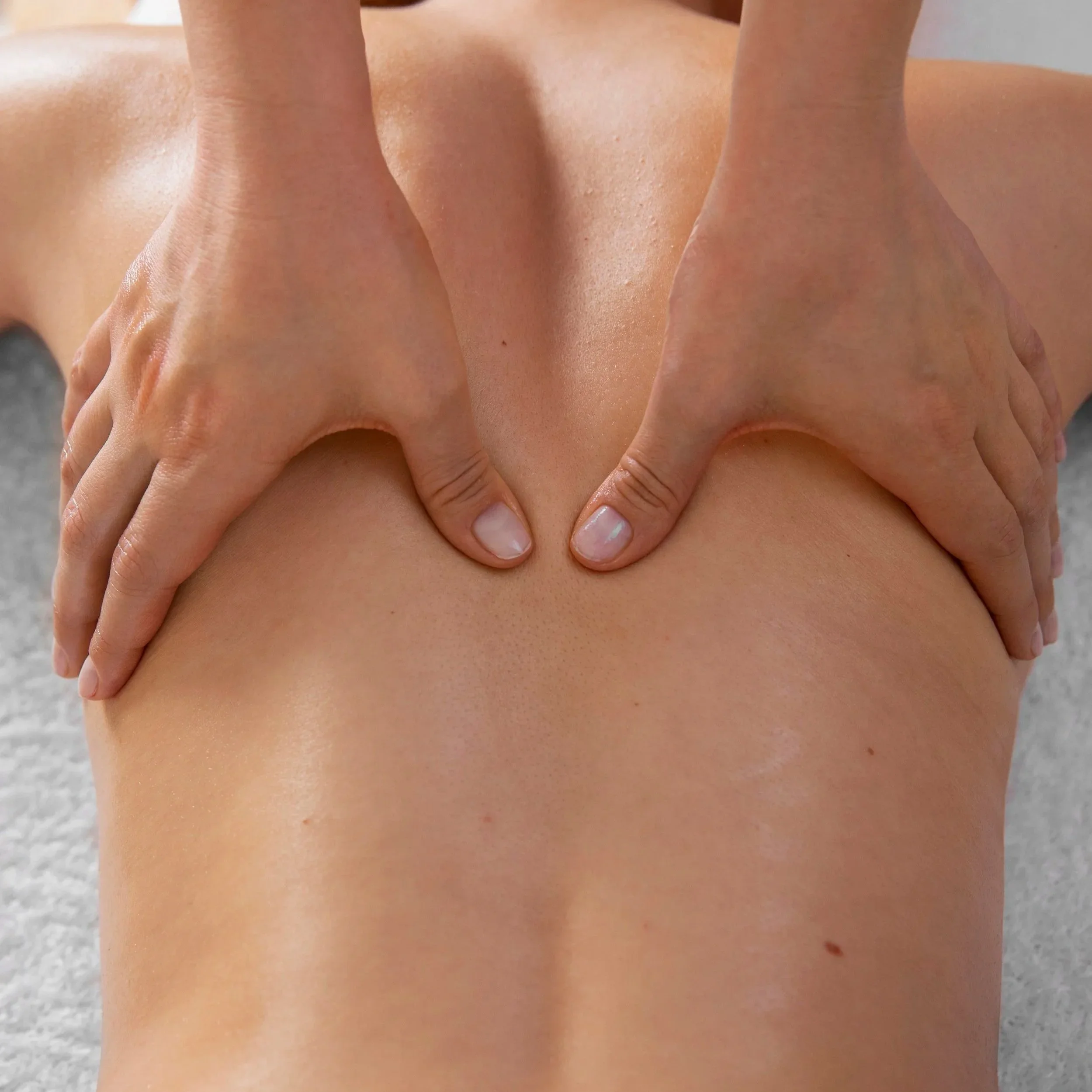
Hot stone massage
Best suited for: Those who enjoy soothing warmth as part of a deeply relaxing session.
What to expect: Smooth, heated stones are used alongside traditional massage techniques. The warmth can help muscles relax, while pressure and focus are discussed with you beforehand.

What to expect at Mountain Valley Massage
A one-on-one consultation to discuss your goals, comfort, and areas of concern.
A comfortable, private setting with a licensed massage therapist.
A customized session, with flexible lengths and pressure adjusted to your needs.
Post-massage care recommendations to support your ongoing self-care.
Straightforward pricing: 30-Minute Custom Massage $50, 60-Minute Custom Massage $100, 90-Minute Custom Massage $150, Hot Stone Enhancement +$20.
A caring next step
Desk-related shoulder tension is common, but you don’t have to ignore it or push through discomfort. A few workstation adjustments, easy movement breaks, and moments to breathe can help you care for your body during the workday. If you’d like hands-on support, massage can offer a calm space to focus on relaxation and relief.
I’m Kristina Swank, a licensed massage therapist in Hamilton, Montana. I’ll listen to what you’re experiencing and work with you to customize a session that feels comfortable and supportive. If you’re ready to make time for a little more restoration, you’re welcome to book an appointment.
Kristina Swank, Licensed Massage Therapist in Hamilton, Montana